The notorious Mexican cartel leader Nemesio Oseguera, known as "El Mencho," was buried Monday in a modest ceremony that contrasted sharply with the lavish funerals often associated with drug lords in Mexico.
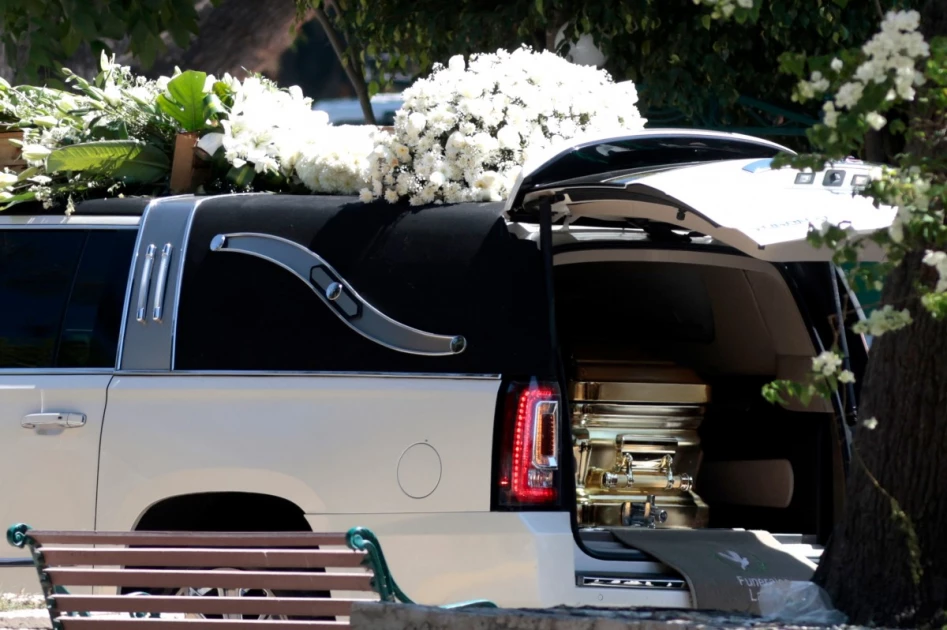
Trucks piled high with flowers lined the route to the cemetery, while masked soldiers in armored vehicles kept a vigilant watch, and traditional music played for the small group of mourners.
Oseguera, who headed the powerful Jalisco New Generation Cartel and was the US government’s most-wanted drug trafficker with a $15 million bounty, was fatally shot on February 22 during a raid by elite Mexican troops at a country club in Jalisco.
His remains were transferred to his family on Saturday by federal prosecutors, who moved the body from Mexico City to the suburb of Zapopan near Guadalajara for burial.
Unlike other cartel bosses who are often laid to rest in grand mausoleums, Oseguera was placed in a simple grave near a military post, about five kilometers from a stadium scheduled to host four World Cup matches this summer.
A soldier who spoke on condition of anonymity told AFP that since his death, the body had been guarded around the clock “so that rival groups do not defile him.”
The funeral home holding his body was surrounded starting Sunday by soldiers, National Guard personnel, and police who screened everyone approaching.
Despite the tight security, the flow of floral tributes continued unabated. Among the arrangements were elaborate displays, including one shaped like angel wings made of red roses and another resembling a rooster, honoring Oseguera’s passion for cockfighting.
Most of the bouquets were sent anonymously, and it reportedly took five trucks to carry them to the cemetery.
Earlier on Monday, eight people dressed in black—presumably family members—followed the white hearse carrying Oseguera’s coffin in two cars. The convoy was flanked by a dozen military and National Guard vehicles and led by two police motorcycles.
Upon arrival at the cemetery just before noon, the grounds were sealed off by dozens of soldiers.
The coffin was placed in a chapel where mourners were accompanied by a band performing “narcocorridos,” traditional songs that recount the lives of drug lords. After an hour-long service, the coffin was returned to the hearse and taken to the grave while a dozen mourners followed on foot to the song with these lyrics: "Now that I'm dead I'm going to go away, no more than a handful of dirt."
Oseguera’s death also sparked a violent response from his cartel. Eight of his escorts were killed during the raid, and in the aftermath, cartel members retaliated across Mexico, blocking highways, setting businesses on fire, and attacking security forces.
Violence erupted in 20 of the country’s 32 states, leaving at least 70 people dead.